Case study · Innovation · SMB lending
Faster loan decisions — for everyone in the chain
Transforming how small-business loan decisions get made at a regional bank: from paperwork, disconnected systems, and in-person trips to a fast, validated digital concept — in four weeks.
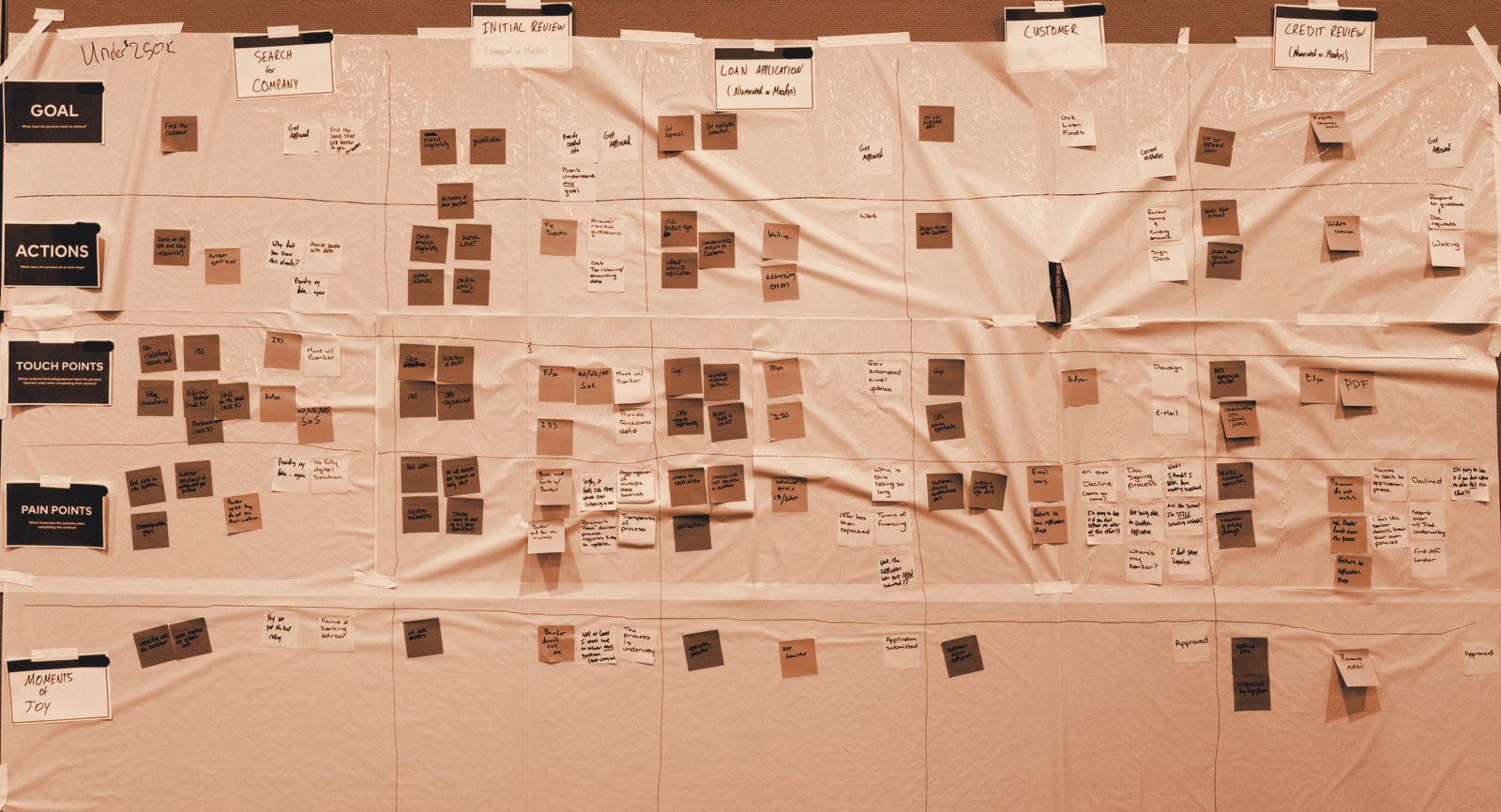
A modern loan, stuck in an analog process
A regional bank was under pressure to modernize its small-business commercial loan process to stay competitive with peers already ahead of the curve. The current state: physical paperwork, disconnected systems, in-person trips to the banker, and a stack of tiresome hurdles that frustrated everyone involved — borrowers and bank staff alike.
Faster, less manual, more insightful — on both sides of the desk
Make commercial loan decisioning faster, with less manual intervention and more insightful data — for the customer and the employee. The catch with lending: a "faster" decision still has to be a sound one, so the work was as much about credit confidence as it was about speed.
Leading the room, and the work
As Lead Innovation Strategist I owned the engagement end to end and the cross-functional delivery team — strategists, designers, developers, video, SMEs, and the account team. I framed the problem, planned the design-thinking workshop, and drove the client to a single experience strategy. The room itself was the asset here: a deep bench of client stakeholders, executives included.
Four weeks, framed to de-risk before building
The evidence behind the concept
Real research, not a brainstorm — composite personas for every player in the chain (the SMB borrower, the credit analyst, the commercial banker), empathy and journey mapping, and structured ideation filtered down to a buildable solution. A sample, sanitized:
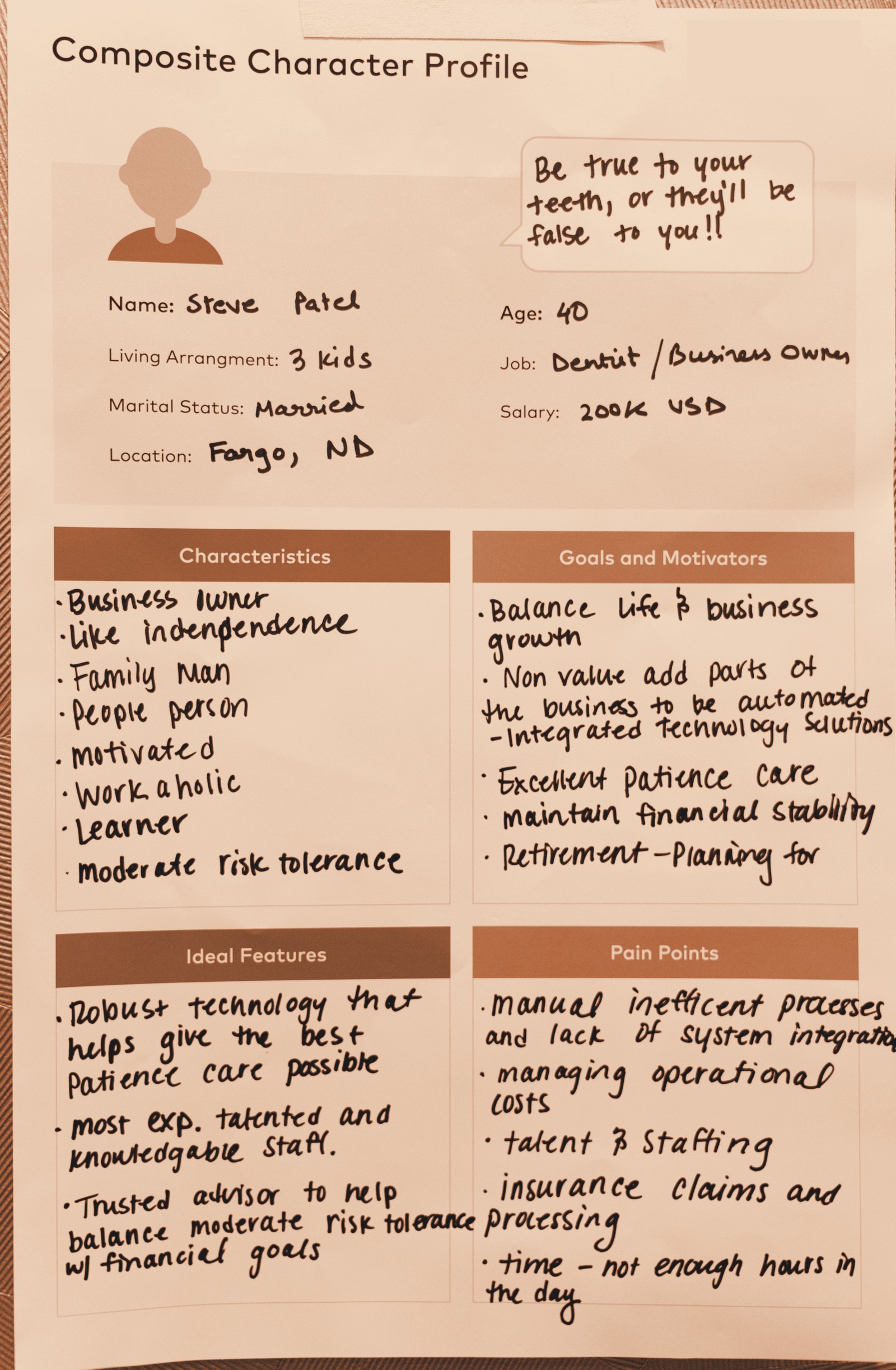
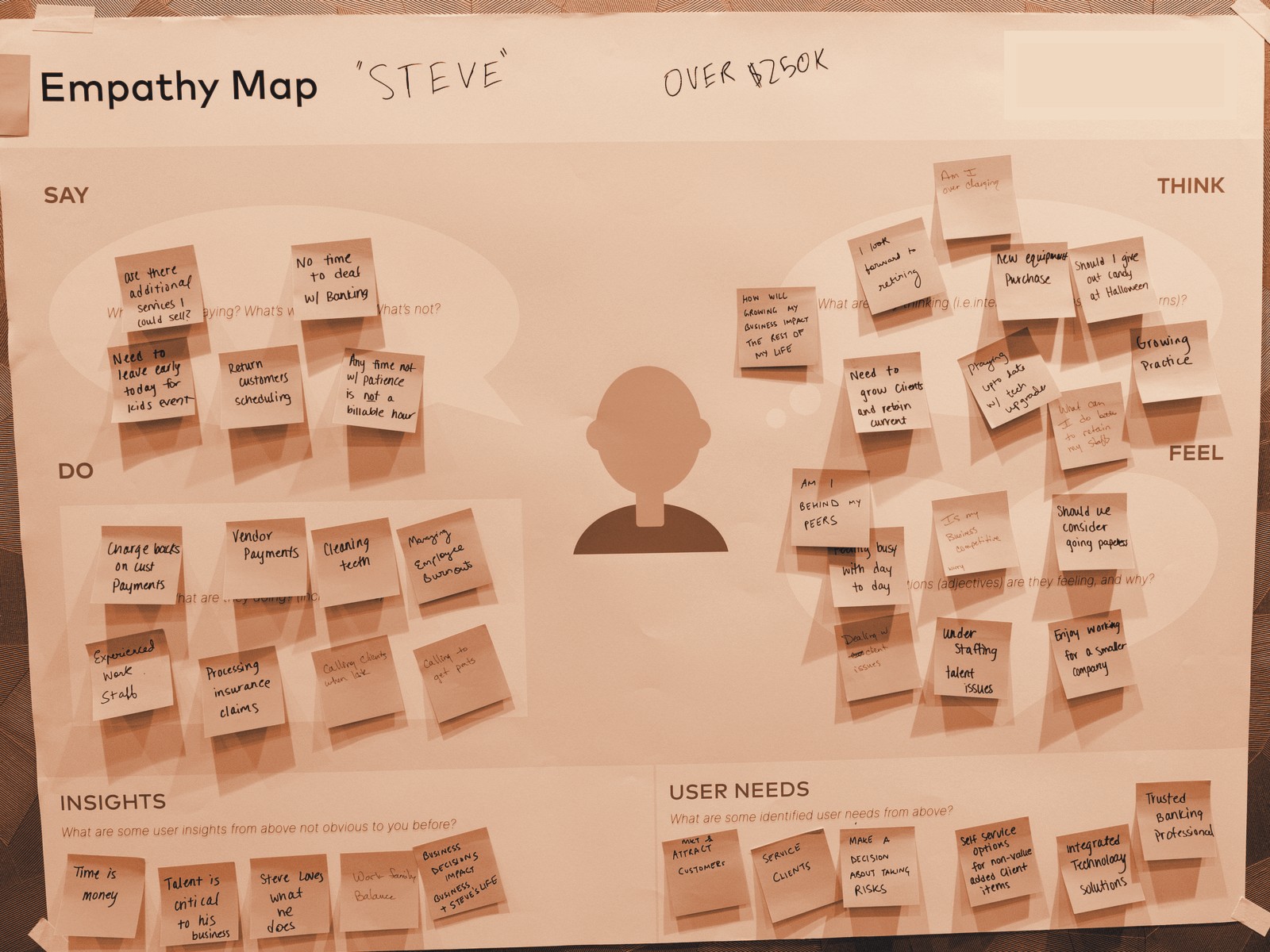
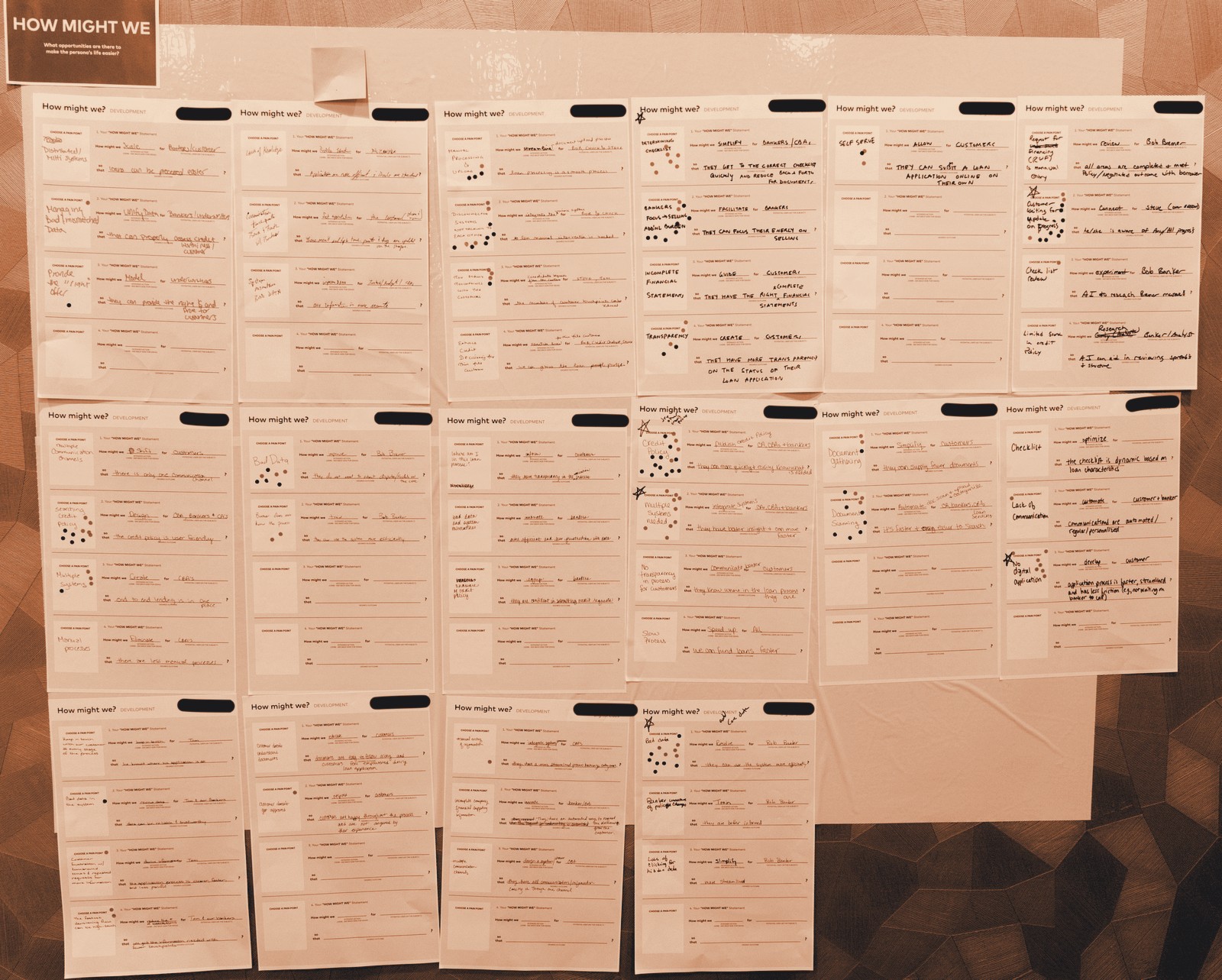
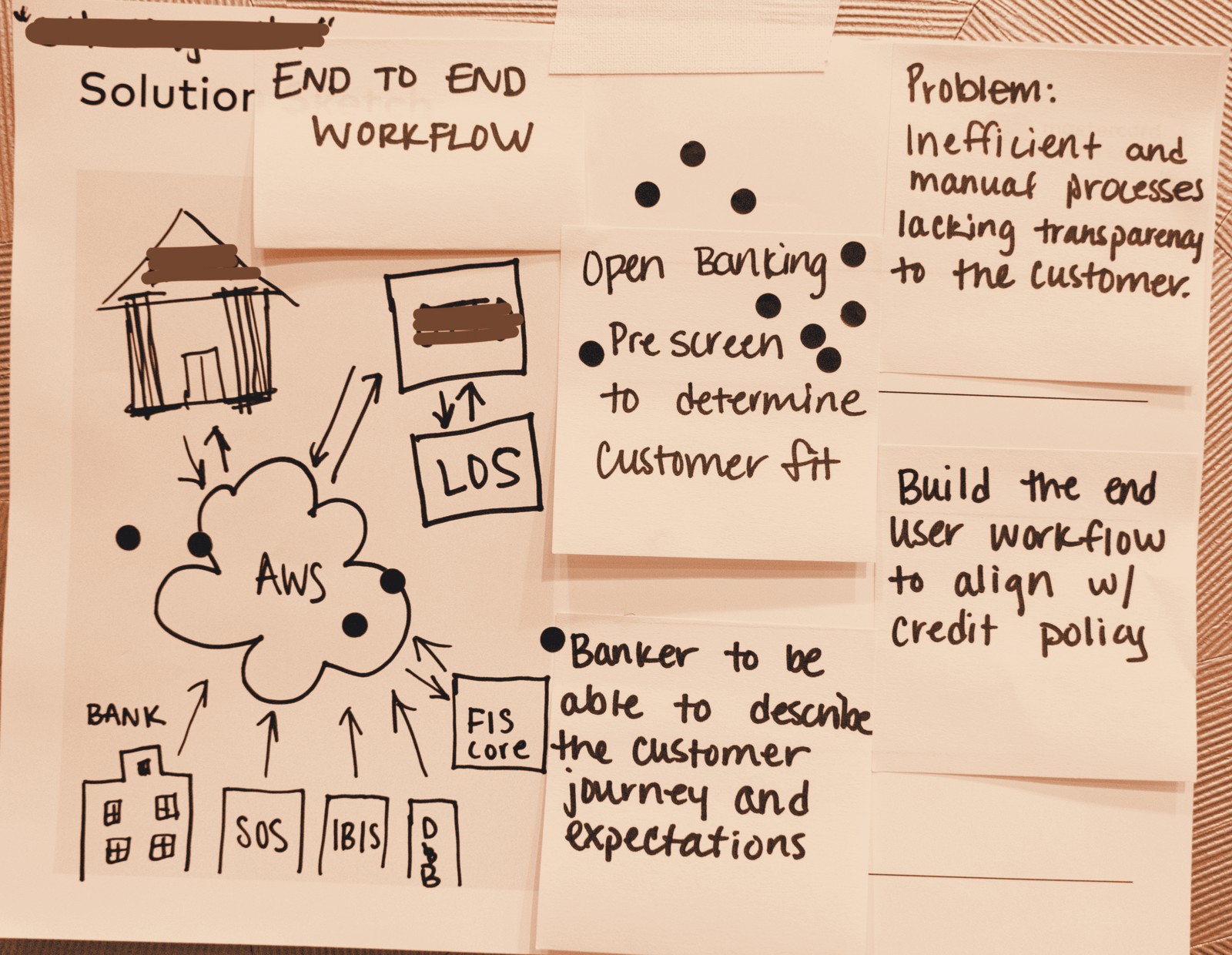

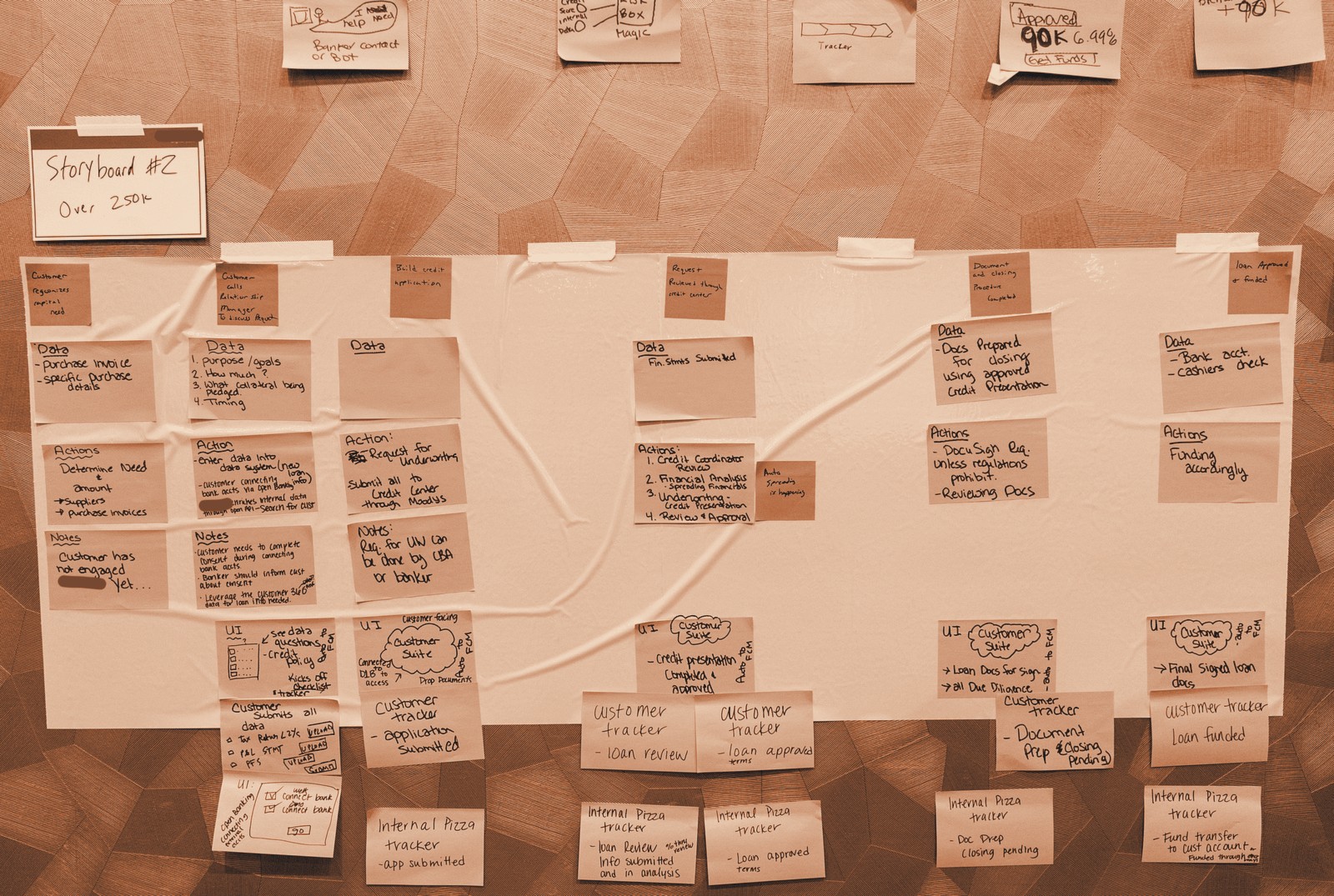
From paper to a validated digital concept
The engagement produced a validated, high-fidelity iOS prototype, an executive pitch, and a concept advertisement — taking the bank from paper-and-in-person to a digital decisioning experience the room had aligned behind, with substantially improved satisfaction for both customers and staff.
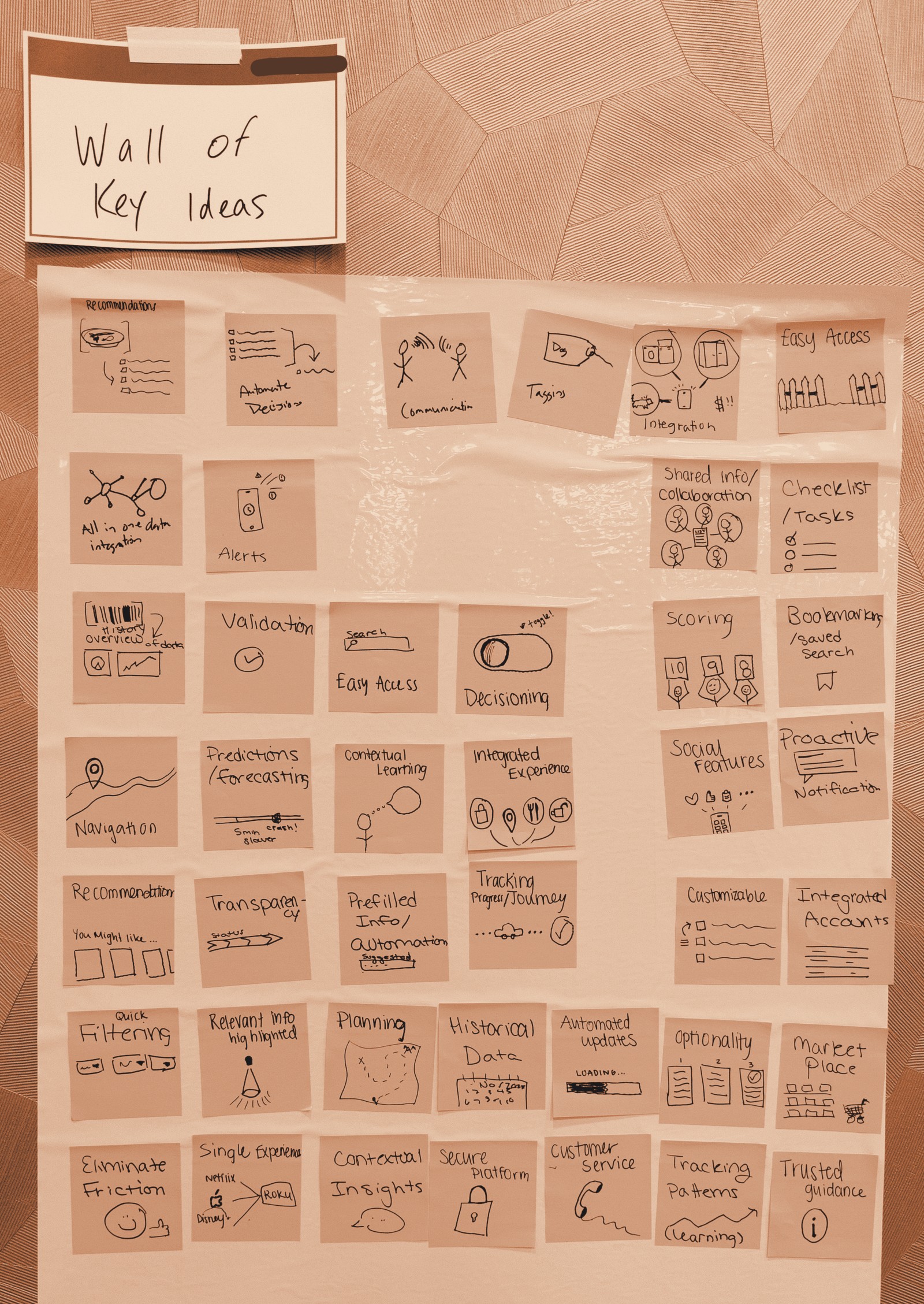
You can't speed up a loan decision by skipping the thinking. The win wasn't a slicker screen — it was getting a roomful of bankers, analysts, and executives to agree on what "better" actually meant, then proving it before a line of production code.
A slice of a deeper toolkit — 70+ named research, product, and facilitation methods, drawn from a working library of 175+ structured activities. The right ones get pulled for the problem in the room.