Case study · Innovation · payments developer experience
One portal for novices and power-users alike
A self-service payments portal that had to work for a first-timer setting up their first integration and an expert who needs everything configurable — across two of the most complex spaces there are: payments and software development.

Two complex worlds, five very different users
The client serves Independent Software Vendors (ISVs) — middle-men who sell software to other businesses across the entire maturity spectrum. That puts an ISV in a tough spot: they have to understand their own space and their customers' space, on both the novice and expert ends at once. And payments is highly regulated and highly complex — a lot to consider out of the gate, and more once reality sets in.
Newly onboarded ISV customers often know nothing about payments or development — but as they mature, the same businesses suddenly need their payments deeply configurable. Put it together and you have two complex domains and at least five distinct users to serve at once:
Make it easy for novices, configurable for experts — and revenue-generating for the provider
A white-label payments provider wanted a new self-service portal supporting both developers and finance teams at the software companies (ISVs) that help small businesses — restaurants, boutique shops, freelancers — accept payments. The brief: make it easy for novices to get started, give power-users the configurability they need, showcase the provider's capabilities, and open new ways to generate revenue.
Leading the engagement, intro to delivery
As Lead Innovation Strategist I owned the project and the cross-functional team end to end — strategists, designers, developers, video, SMEs, product owners, and the account team. I framed the problem, planned the design-thinking workshop down to the artifacts the team needed to build a functional prototype, and drove the client to a single customer-experience strategy aligned with the account's roadmap.
Seven weeks — and the client started building before we finished
Structured divergence, then ruthless convergence
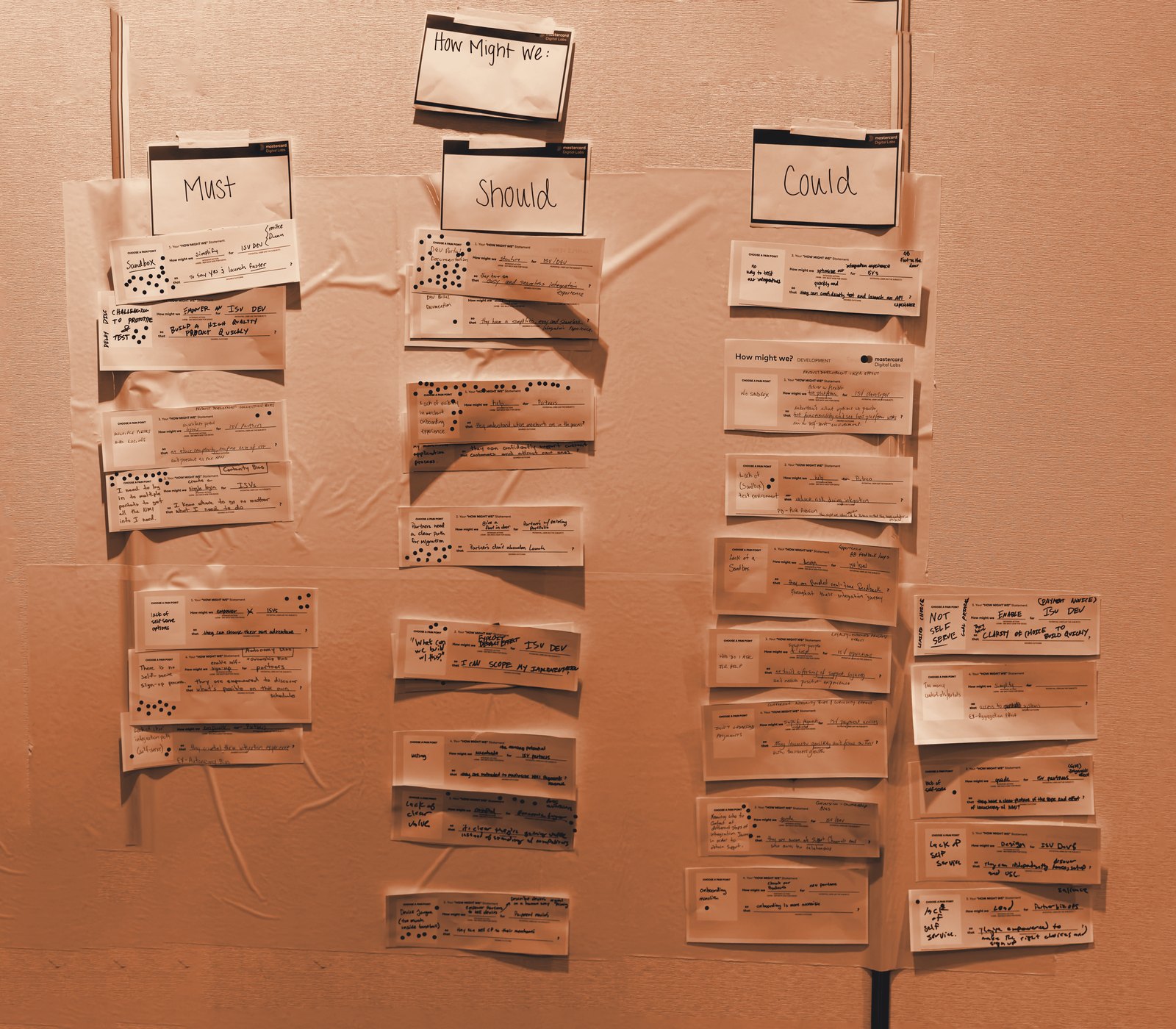
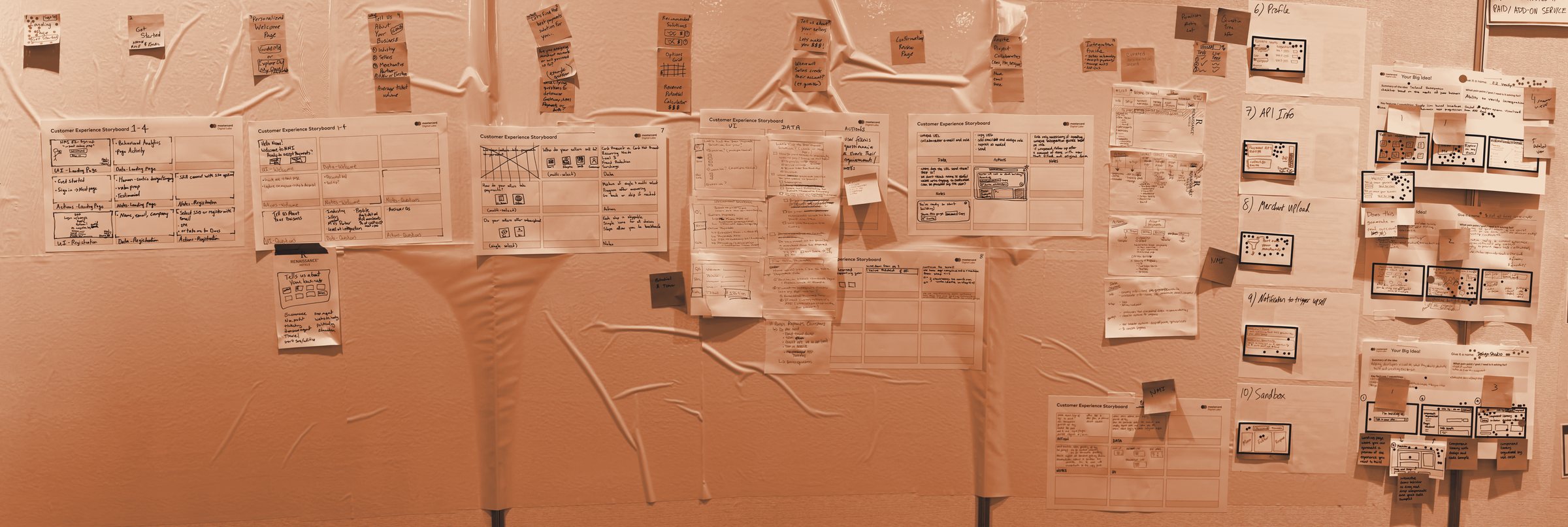
The week ran on design-thinking method: empathy and journey mapping to frame the problem, How-Might-We statements scored into Must / Should / Could, and a customer-experience storyboard that doubled as the build spec. The walls below are the actual artifacts — client branding redacted.
A self-service portal that meets users where they are
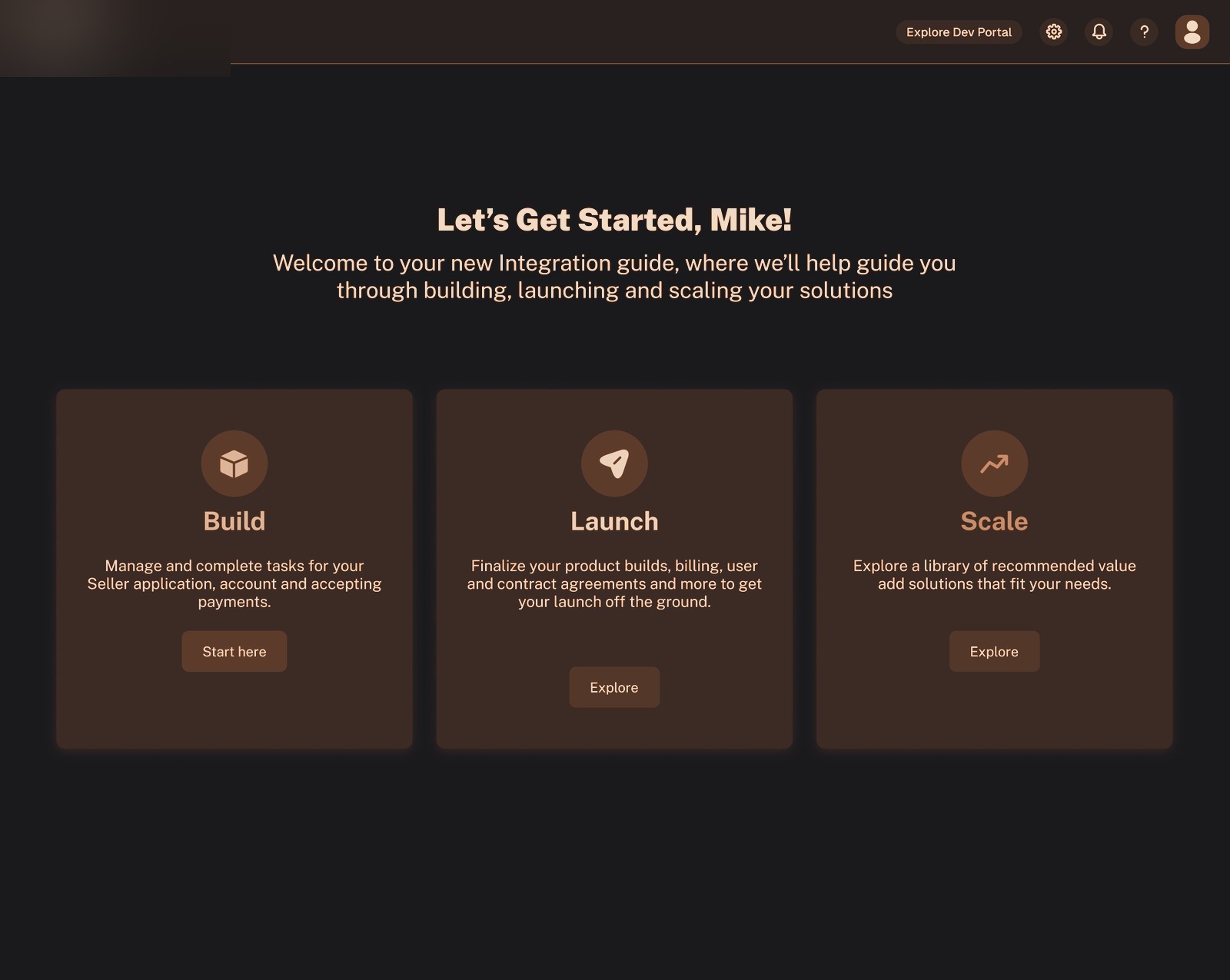
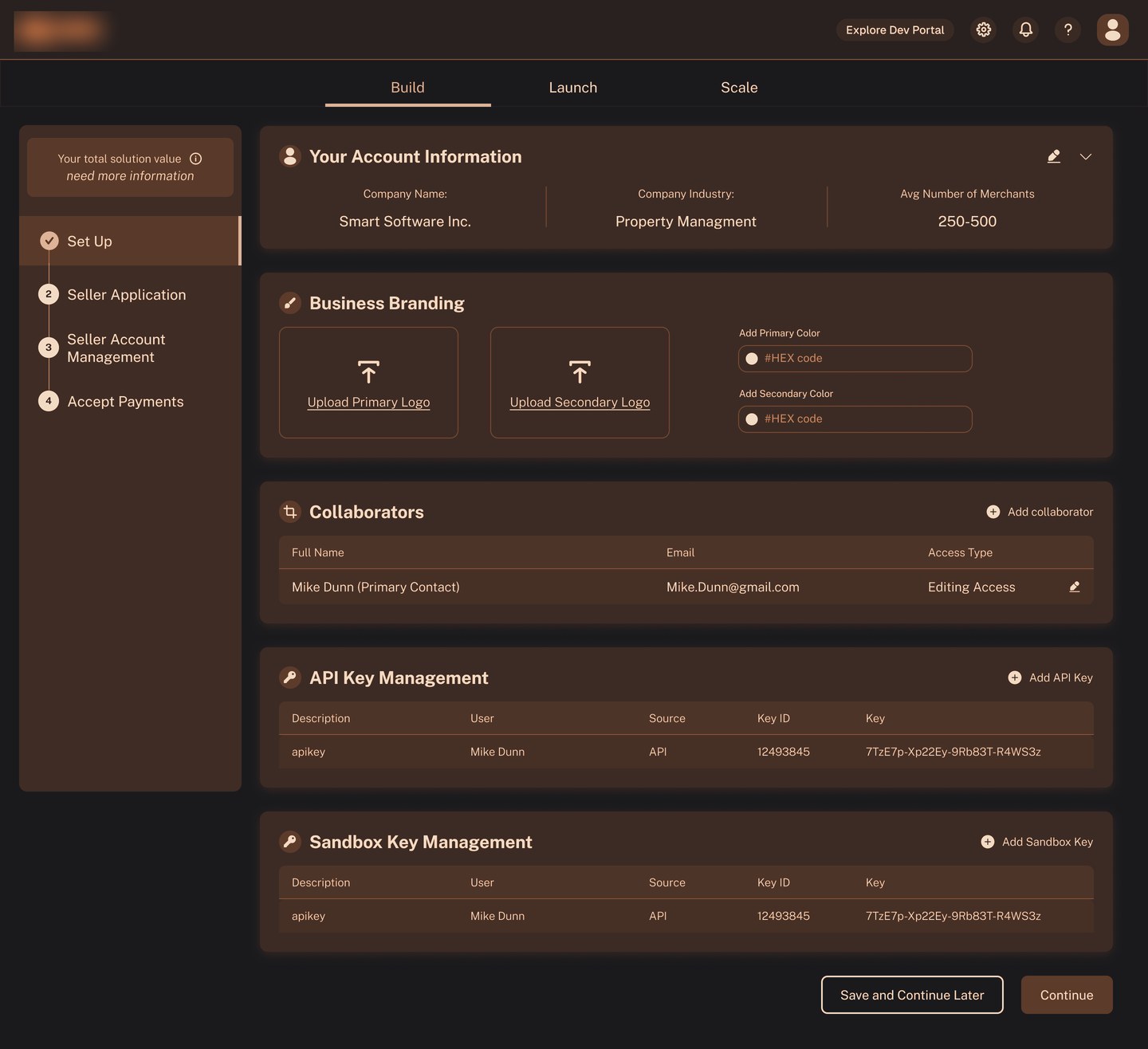
The prototype framed the whole experience around three jobs — Build, Launch, Scale — so a novice sees a guided path and an expert can jump straight to configuration. Client branding redacted.
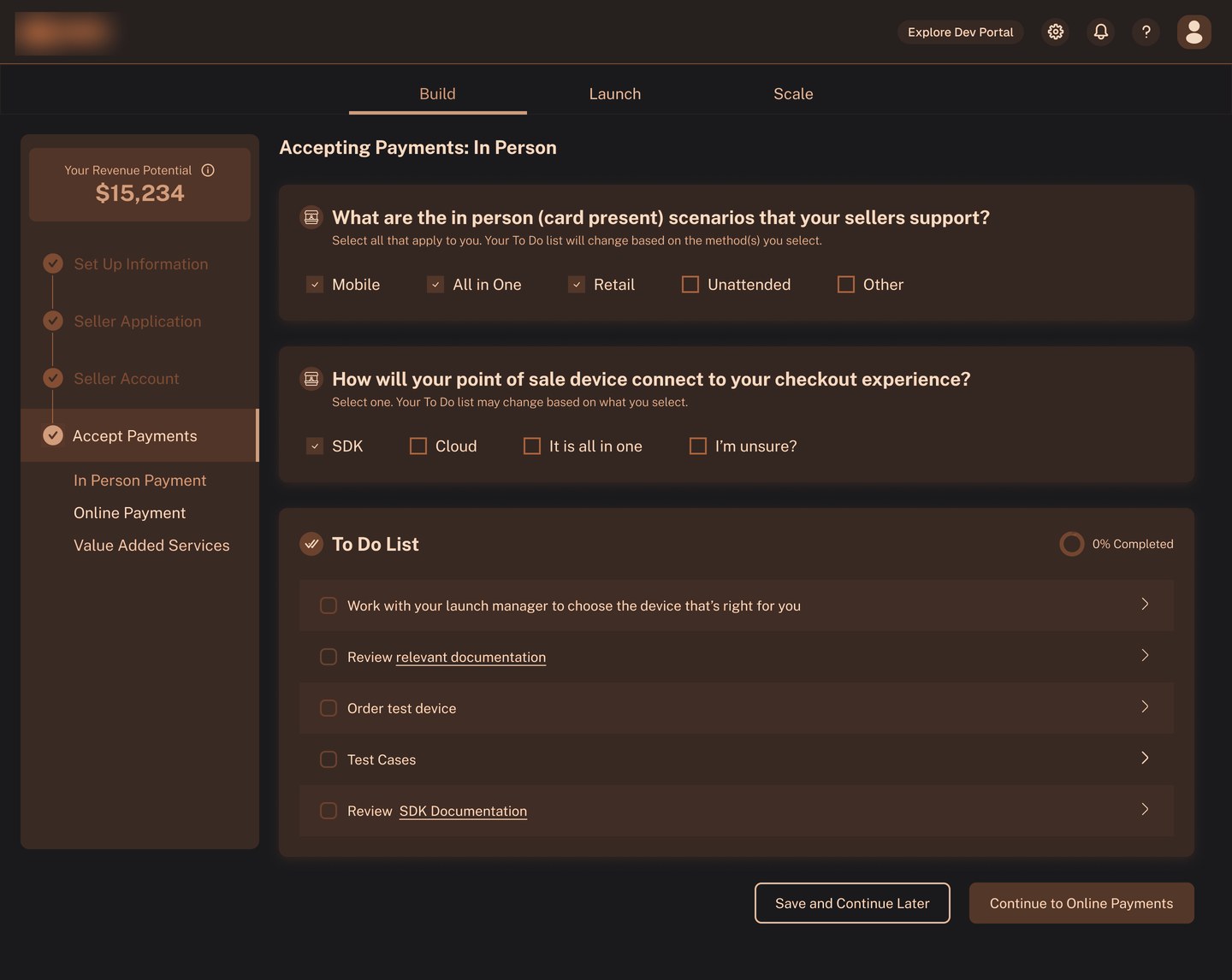
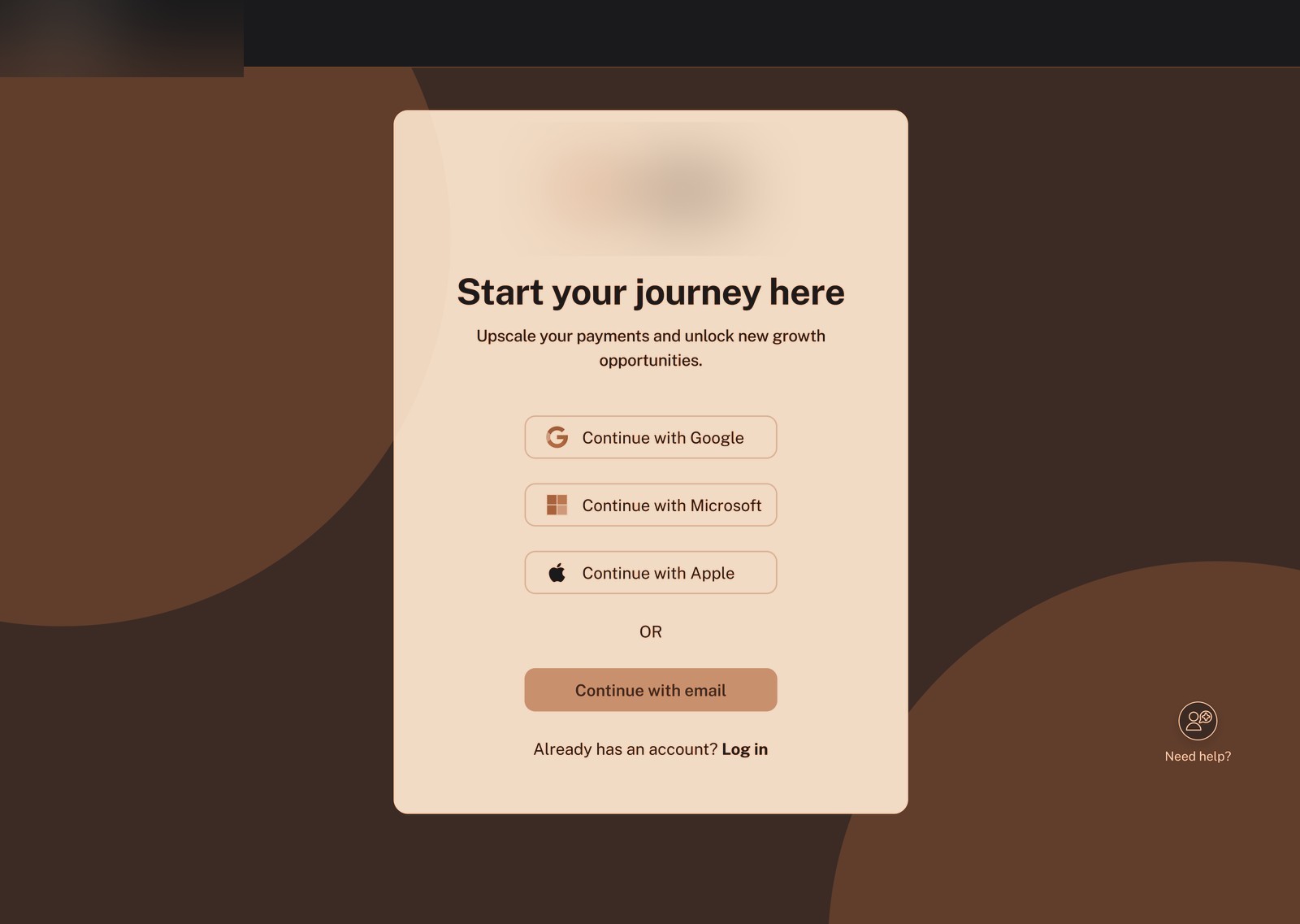
The hard part wasn't the screens — it was holding five contradictory users in your head at once and finding the one structure that served them all. A developer's hat doesn't mean someone speaks payments; the portal had to teach without condescending and configure without overwhelming.
A slice of a deeper toolkit — 70+ named research, product, and facilitation methods, drawn from a working library of 175+ structured activities. The right ones get pulled for the problem in the room.